NZ Solar Guide
Solar Panels Tauranga: High Sunshine Hours & ROI

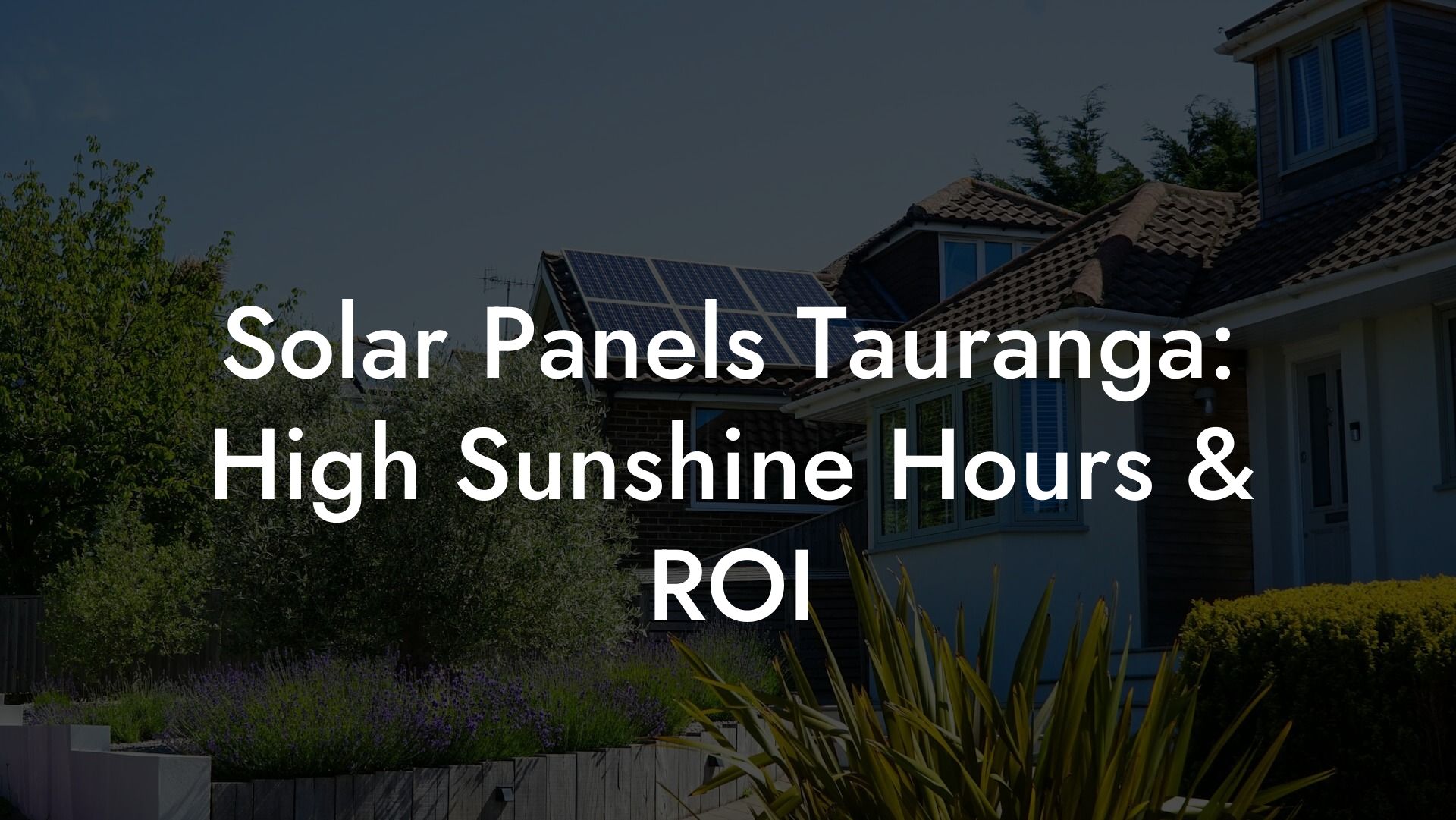
Tauranga is one of the genuinely great spots in New Zealand for solar. The Bay of Plenty soaks up roughly 2,200 to 2,260 sunshine hours a year, among the highest in the country per NIWA's long-term climate data, and a well-sited 5kW system in Tauranga will typically generate around 7,000 to 7,800 kWh a year. A fully installed 5kW system runs roughly $9,000 to $12,000 in 2025 (around $1.70 to $2.00 per watt, per installer pricing and MBIE figures). With Tauranga's sun and decent self-consumption, most households see a payback somewhere in the 7 to 11 year range, and quality panels carry 25-year performance warranties. In short: the resource here is excellent. The trick is sizing it right and understanding how the Powerco network treats your export.
Why Tauranga is a strong solar town
Sunshine hours matter, but so does the quality of that sun. The Bay of Plenty gets long, clear summers and relatively mild, bright winters compared with much of the country. NIWA's records consistently put Tauranga, Whakatāne and the wider Bay near the top of the national sunshine table, regularly trading places with Nelson and Blenheim for the title.
For a homeowner, that translates into real generation. A north-facing roof at Tauranga's latitude (around 37.7 degrees south) sits at a near-ideal angle for year-round production. The summer yield here is genuinely high, and even the winter floor is better than what you'd see in Wellington or Invercargill.
Here's the honest part though: high sunshine hours do not automatically mean a fast payback. What you actually save depends far more on how much of your own solar you use during daylight hours than on the raw size of the resource. We'll come back to that, because it's where most quotes quietly oversell the savings.
What a system costs and generates in Tauranga
Pricing in the Bay tracks the national market closely. As a rough 2025 guide, fully installed and consented:
- 3kW system: around $6,500 to $8,500, generating roughly 4,200 to 4,700 kWh a year here.
- 5kW system: around $9,000 to $12,000, generating roughly 7,000 to 7,800 kWh a year.
- 6.6kW system: around $11,000 to $14,500, generating roughly 9,200 to 10,300 kWh a year.
- 10kW system: around $16,000 to $21,000, generating roughly 14,000 to 15,600 kWh a year.
Those generation figures use a yield of roughly 1,400 to 1,560 kWh per kW installed per year for a well-oriented Tauranga roof, which is consistent with NIWA solar radiation data for the region and EECA's general guidance on system output. Cloud, shading, panel orientation and roof pitch will all push your real number around within that band.
For context on how much the location genuinely matters, a north-facing array in the Bay of Plenty will out-produce the same array in Auckland by a small but real margin, and comfortably beat the same system in Wellington or on the West Coast. If you want to see how the regions stack up against each other, we lay it all out in our regional solar guide.
The Powerco network: what Tauranga homeowners need to know
Most of Tauranga and the wider Western Bay of Plenty sits on the Powerco network. Powerco is the lines company that owns the poles and wires and sets the rules for connecting solar, even though you pay your power bill to a retailer like Mercury, Genesis, Contact or Octopus Energy NZ.
This distinction trips a lot of people up, so let's be clear: Powerco does not pay you for the power you export. Your lines company controls the technical connection. Your retailer pays the buy-back rate for surplus energy you push to the grid. Getting both right is what makes or breaks the maths.
Connecting your solar to the Powerco network
Before any grid-connected solar goes live, the installer must apply to Powerco for approval to connect what's called distributed generation. For a standard residential system, this is routine, and a competent local installer handles the paperwork for you. A few things worth knowing:
- Systems up to 10kW per phase generally go through a streamlined approval process under the standard Part 1A distributed generation rules that lines companies follow nationally.
- Larger systems, or three-phase setups, can require more detailed assessment, and occasionally Powerco will impose an export limit if the local network can't safely absorb all the surplus at peak times.
- Your inverter must be a grid-compliant model that meets the AS/NZS 4777.2 standard. Any reputable installer only fits compliant inverters, but it's worth confirming in writing.
The genuinely useful insight here, and one most quotes won't mention: in some pockets of the network, particularly newer subdivisions where lots of neighbours already have solar, Powerco can require an export limit (say, capping you at 5kW of export even on a 6.6kW system). This rarely hurts your savings much, because the power you can't export you usually want to be using yourself anyway. But if an installer is selling you a big system on the promise of big export income, ask them to confirm with Powerco that your specific address has no export constraint before you sign. Get that answer in writing.
The number that actually decides your payback
This is the part the industry tends to skate over, so here it is plainly. The power you generate has two possible fates:
- Self-consumption: you use it the moment it's made. This offsets power you'd otherwise buy from your retailer at the full retail rate, typically 28 to 38 cents per kWh in 2025 depending on your plan and network charges.
- Export: you send the surplus to the grid and get paid the buy-back rate, which across most NZ retailers sits somewhere around 7 to 17 cents per kWh, with a few time-of-use deals paying more at peak.
See the gap? Every kWh you use yourself is worth roughly two to four times more than every kWh you export. That single fact is why two identical homes on the same Tauranga street can get wildly different value from the same system.
Take a retired couple in Pāpāmoa who are home all day, running the heat pump, the kettle, the washing and the dishwasher while the sun is up. They might self-consume 50 to 60 percent of their generation, and their payback looks excellent. Now take the young family in Bethlehem with both parents at work and the kids at school, where the house is empty from 8am to 4pm. They might self-consume only 20 to 25 percent, exporting the bulk of their summer generation at a buy-back rate that's a fraction of retail. Same sun, same system, very different return.
The fix for the second household isn't a bigger system. It's shifting load into daylight (dishwasher and washing on timers, hot water cylinder heating midday) or adding a battery to store the surplus for the evening peak. Whether a battery actually pencils out is its own careful piece of maths, and it depends heavily on your buy-back rate and your evening usage.
Squeezing the most out of Tauranga's sun
The Bay gives you a great resource. Here's how to actually capture it:
Orientation and pitch
North-facing is the gold standard for total annual yield, and it suits the older, simpler rooflines common around Tauranga's established suburbs. But a split east-west array can be smarter for a working household, because it spreads generation across the morning and afternoon rather than spiking at noon when nobody's home. More of that power lands when you're actually using it.
A roof pitch of around 25 to 35 degrees is close to ideal at this latitude. Most Tauranga homes are within a workable range, and a good installer will model your specific roof rather than quoting a generic number.
Watch the shading, especially the trees
The Bay's growing conditions are excellent, which is lovely for the garden and a problem for solar. Mature pōhutukawa, tall shelter trees and the neighbour's fast-growing gum can throw afternoon shade that quietly kills production. Solar panels are wired in series within a string, so even partial shade on one panel can drag down the whole string's output.
If shading is unavoidable, ask about panel-level optimisers or microinverters, which isolate each panel so one shaded module doesn't pull the rest down. They cost a bit more but can be well worth it on a tree-lined section.
Size for your daytime use, not your total bill
The most common mistake we see is oversizing. An installer sees a big annual power bill and quotes a big system, but if most of that usage is in the evening, you'll just export the daytime surplus at a low rate. Size the array to match what you genuinely use during daylight, then consider load-shifting or storage for the rest. A right-sized 5kW or 6.6kW system that you use well will almost always beat an oversized 10kW system you export half of.
Sorting out your buy-back rate before you commit
Because export is worth so much less than self-consumption, your buy-back rate matters most for any surplus you can't avoid sending to the grid. These rates change regularly and vary a lot between retailers, so the smart move is to line up your retailer plan before the panels go on the roof, not after.
Some retailers pay a flat buy-back rate; others pay more during peak demand windows, which can suit a household with a battery that discharges in the evening. A handful run plans specifically aimed at solar households. Don't assume your current retailer offers the best deal just because you're already with them; it's worth a phone call to two or three before you sign your install contract.
Auckland homeowners face a slightly different dynamic because of how Vector structures its lines charges, and Christchurch sits on the Orion network with its own quirks. If you've got family comparing notes in those cities, our breakdowns of solar in Auckland and solar in Christchurch explain how the local networks change the maths. Wellington's a different story again thanks to cloud and wind, which we cover in our Wellington guide.
Where solar doesn't stack up in Tauranga
We're on your side, which means being straight about who shouldn't bother, or at least should think twice:
- Renters. Unless you've got a genuinely long-term arrangement and a willing landlord, you won't be around long enough to recoup the upfront cost. The maths needs years.
- Homes empty all day with no plan to change that. If nobody's home during daylight, you can't shift load, and you're not adding a battery, you'll export most of your generation at low rates and the payback stretches out.
- Heavily shaded roofs. A section ringed by tall trees you can't or won't trim will underperform badly, optimisers or not.
- Short-term owners. If you're likely to sell within three or four years, solar may add some resale appeal but you won't see the full financial return yourself.
And the honest caveat for everyone: solar will not zero your power bill. You'll still draw from the grid on dark winter evenings and through cloudy stretches, and you'll still pay your daily fixed charges. What good solar does is take a serious, lasting bite out of the bill, and lock in some protection against future price rises. That's genuinely valuable. It's just not magic.
What to check before you sign a Tauranga quote
Run any quote through this list:
- Is the generation estimate realistic? For a north-facing Tauranga roof, expect around 1,400 to 1,560 kWh per kW per year. If a quote claims dramatically more, ask how.
- Does the savings projection separate self-consumption from export? If it lumps everything together at retail rates, it's overstating your return. Make them show the split.
- Has the installer confirmed your Powerco connection and any export limit? Especially for systems over 5kW or in newer subdivisions.
- What inverter and panels, and what are the warranties? Look for a 25-year panel performance warranty and a 5 to 10 year (ideally 10) inverter warranty, plus a clear workmanship warranty on the install itself.
- Is the installer SEANZ-aligned and using licensed electricians? Grid-connected work must be signed off by a registered electrician.
- Read the warranty fine print. Some contracts quietly void the warranty if anyone other than the original installer touches the system, even for unrelated roof work. Know what you're agreeing to.
The single best protection is comparing a few quotes side by side. Patterns jump out fast: one installer's generation estimate is wildly optimistic, another's pricing is double, a third quietly leaves out the export limit. If you'd rather not chase installers yourself, we can put you in front of three vetted installers, or you can browse who operates in the Bay through our installers by region tool.
Frequently Asked Questions
How many sunshine hours does Tauranga get?
Tauranga averages roughly 2,200 to 2,260 sunshine hours a year according to NIWA's long-term climate records, making it one of the sunniest cities in New Zealand. That high, consistent resource is a genuine advantage for solar, particularly through the long Bay of Plenty summers.
How much does a solar system cost in Tauranga?
A fully installed 5kW system runs roughly $9,000 to $12,000 in 2025 (around $1.70 to $2.00 per watt, per installer pricing and MBIE data), with a 6.6kW system around $11,000 to $14,500. Prices in the Bay track the national market closely. Always compare a few quotes, because pricing on identical systems can vary by thousands.
What is the payback period for solar in Tauranga?
Most well-sized Tauranga systems pay back in roughly 7 to 11 years, helped by the region's high sunshine hours. The biggest single factor is how much of your own solar you use during the day rather than export, so a household home during daylight will see a faster return than one empty from 8am to 4pm.
Does Powerco pay me for the solar power I export?
No. Powerco is the lines company that owns the network and approves your connection; it doesn't buy your surplus power. Your electricity retailer (such as Mercury, Genesis, Contact or Octopus Energy NZ) pays the buy-back rate for what you export, typically around 7 to 17 cents per kWh depending on the plan.
Do I need approval to connect solar in Tauranga?
Yes. Your installer must apply to Powerco for distributed generation approval before the system goes live, and your inverter must meet the AS/NZS 4777.2 standard. For standard residential systems up to 10kW this is routine, though larger or three-phase systems and some newer subdivisions may have an export limit applied.
Is a north-facing or east-west roof better in Tauranga?
North-facing gives the highest total annual yield and suits households home through the middle of the day. A split east-west array produces less overall but spreads generation across morning and afternoon, which can mean more of your power lands when a working household is actually home to use it.
Will solar get rid of my power bill completely?
No, and be wary of anyone who says it will. You'll still draw from the grid on winter evenings and cloudy days, and you'll still pay fixed daily charges. Good solar takes a substantial, lasting chunk out of your bill rather than eliminating it.
Is a battery worth it in Tauranga?
It depends on your evening usage and your buy-back rate. A battery lets you store daytime solar to use after dark instead of exporting it at a low rate, which suits households with high evening demand. It adds significant upfront cost, so the maths needs working through carefully for your specific situation rather than assuming it always pays.
The Bottom Line
Tauranga is one of the best places in the country to put solar on your roof. The sun is plentiful, the network connection through Powerco is straightforward for standard systems, and the payback maths is genuinely attractive when the system is sized to match how you actually live. The winners aren't the people who buy the biggest array; they're the ones who right-size it, use as much as they can during the day, and sort a decent buy-back rate before they sign.
If you're weighing it all up, it's worth seeing how your situation compares to the rest of the country in our regional solar guide, then getting a few honest quotes so you're working with real numbers for your own roof rather than averages. That's where the good decisions get made.