NZ Solar Guide
Solar Panels Palmerston North: Manawatu Network Guide

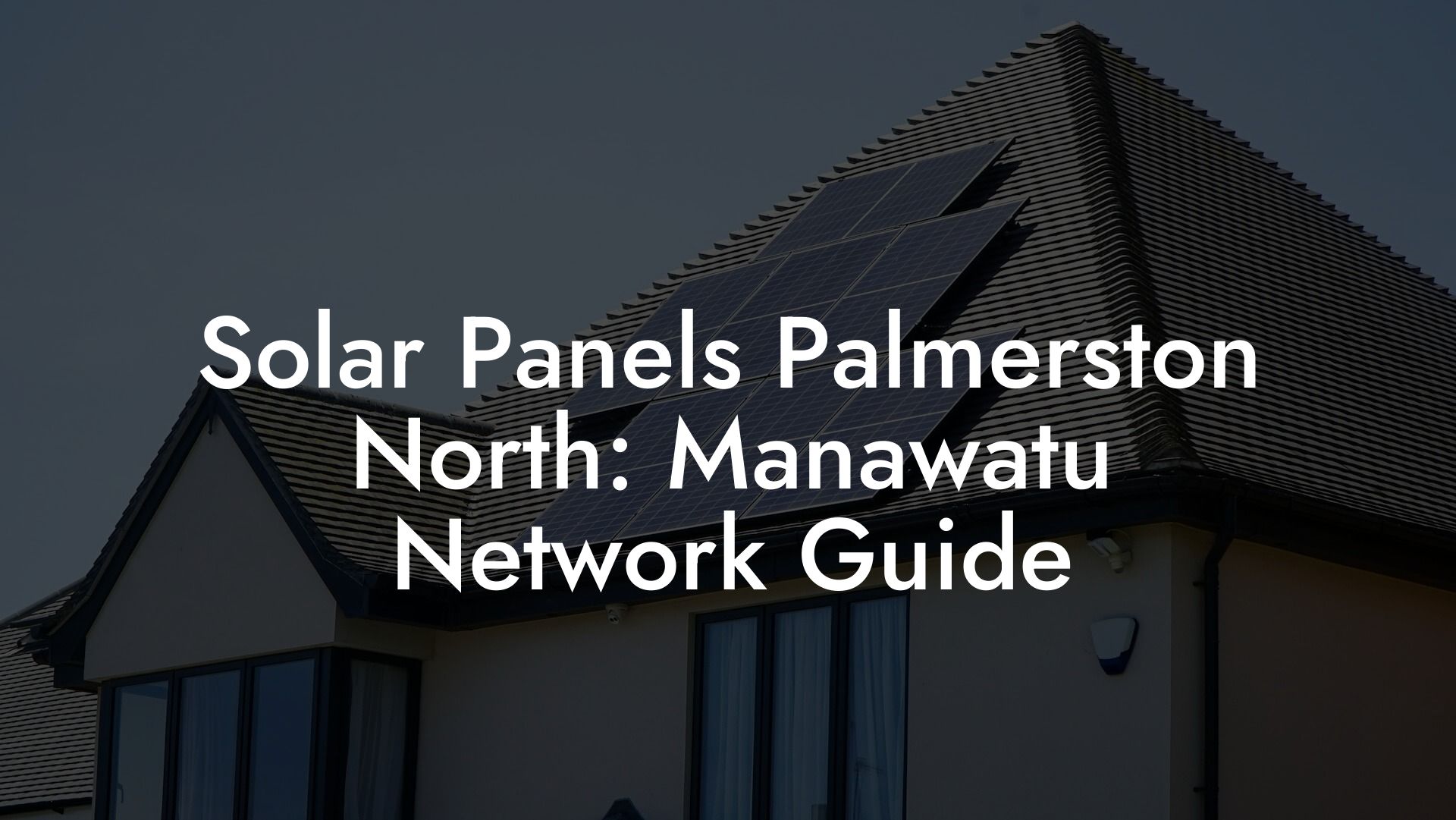
A fully installed 5kW solar system in Palmerston North typically runs $9,000 to $12,500 in 2025 (roughly $1.70 to $2.10 per watt installed), in line with MBIE pricing data and current Manawatū installer quotes. On a decent unshaded roof here, that system will generate somewhere around 6,500 to 7,500 kWh a year, based on NIWA solar radiation figures for the lower North Island. The big local quirk most people miss: you're on the Powerco network, and Powerco's lines charges and connection rules shape your payback just as much as the panels themselves. Get that part right and a Palmy system pays for itself in roughly 9 to 12 years.
Palmerston North sits in a genuinely interesting spot for solar. It's not the sun-drenched top of the North Island, and it's not the cloud trap of the West Coast. It's a flat, spread-out city with big roofs, a lot of single-storey homes, and one of the country's better-understood wind resources right on its doorstep. That combination matters more than people realise, and we'll get into why.
What solar actually costs in Palmerston North right now
Pricing across the Manawatū tracks the national picture closely. There's no Auckland premium and no remote-region surcharge here, which works in your favour. Here's the realistic 2025 range for a quality, fully installed system, consistent with MBIE solar cost data and what local installers are quoting:
- 3kW system: roughly $6,500 to $8,500
- 5kW system: roughly $9,000 to $12,500
- 6.6kW system: roughly $11,500 to $15,000
- 10kW system: roughly $17,000 to $23,000
- Battery (10kWh usable): add roughly $9,000 to $15,000 installed
Those numbers assume a straightforward single-storey install on a tin or tile roof with easy access, which describes a huge share of Palmerston North housing stock. Two-storey jobs, steep roofs, or anything needing a switchboard upgrade will push toward the top of the range.
If you want to sanity-check what's normal nationally before you sign anything, we lay out fair pricing and the line items to watch in our wider regional solar guide.
How much sun does Palmerston North actually get?
This is where Palmy surprises people. According to NIWA's long-run records, Palmerston North averages around 1,700 to 1,750 sunshine hours a year. That's well behind Nelson or Blenheim (both over 2,400 hours), but it's comfortably ahead of the West Coast and broadly similar to Wellington and the wider lower North Island.
What that means in practice: a well-positioned 5kW array will quietly produce 6,500 to 7,500 kWh annually. The catch is the same one every NZ home faces. That generation is heavily skewed to summer. A December day might deliver three to four times what a flat, grey July day gives you.
So the honest framing is this: solar will take a serious bite out of your shoulder-season and summer bills, and it will make a real dent year-round, but it will not zero your winter power bill in Palmerston North. Anyone telling you otherwise is selling, not advising.
Powerco: the network detail that shapes your payback
Palmerston North and the wider Manawatū sit on the Powerco network, which also covers Taranaki, the Bay of Plenty, the Wairarapa, and parts of Whanganui. Powerco doesn't sell you electricity; your retailer does. But Powerco owns the poles and wires, sets the connection rules, and charges the lines fees that your retailer passes through on your bill.
Two things about Powerco genuinely matter for solar owners:
1. Connection approval and inverter limits
Like every NZ network, Powerco requires your installer to apply for permission to connect a generation system (your panels and inverter) to the grid. For a standard residential system this is routine and your installer handles the paperwork. But Powerco sets limits on how much you can export, and on larger systems (typically above 10kW of inverter capacity) the approval process gets more involved and can take longer.
The practical takeaway: ask your installer to confirm the Powerco connection application is lodged and approved before the panels go live. A reputable Manawatū installer does this as a matter of course. If a quote is vague about who handles network approval, that's a red flag.
2. How lines charges interact with self-consumption
Here's the bit installers rarely volunteer. Powerco's distribution charges are bundled into your retail tariff, and many lower North Island plans carry a meaningful fixed daily charge alongside the per-unit rate. Solar reduces the units you buy, but it does not reduce that fixed daily line. You'll keep paying it every single day regardless of how much sun you make.
That's why the real prize in Palmerston North is self-consumption: using your own solar power the moment you generate it, rather than exporting it cheaply and buying it back expensively at night. Every kWh you use yourself is worth the full retail rate you'd otherwise pay (often 28 to 35 cents). Every kWh you export is worth only your retailer's buy-back rate, which is usually far lower. We pull this apart properly in our breakdown of how buy-back rates and self-consumption drive your actual return.
The wind-and-solar angle nobody else explains
Palmerston North has a reputation for wind, and for once that reputation is doing you a favour. The Manawatū is home to some of the country's earliest and largest wind farms (Te Āpiti, Te Rere Hau and others along the Tararua range), precisely because the wind resource here is among the most consistent in the country.
Now, you're almost certainly not putting a wind turbine on your suburban roof in Hokowhitu. So why does this matter to you?
Because wind and solar are naturally complementary, and that complementarity quietly improves the economics of being grid-connected in this region. Solar peaks in summer and during the middle of clear days. Wind, broadly, blows hardest through the cooler months and overnight, exactly when your panels are doing nothing. At a network level, the Manawatū generates serious renewable energy after dark and in winter precisely when your own rooftop can't.
The practical insight: in a region with strong local wind generation feeding the grid, the case for going off-grid is weak and the case for staying smartly grid-connected is strong. You don't need a giant, expensive battery bank trying to carry your household through a still, sunless Manawatū winter, because the grid around you is already being fed by the wind on the ranges. Your best money here is a right-sized solar array plus, optionally, a modest battery for evening self-consumption, not a bunker-style off-grid setup. That distinction alone can save a Palmerston North household tens of thousands of dollars in over-specced gear.
A worked example: a Hokowhitu family home
Let's make it concrete. Picture a 1990s brick-and-tile family home in Hokowhitu, four people, a heat pump, and a typical annual power use of around 8,000 kWh (broadly in line with the average NZ household figure cited by EECA and the Electricity Authority). They're home in the evenings and the kids are at school during the day.
They install a 6.6kW system for $13,500. On Palmerston North sun figures, that array produces roughly 8,500 kWh a year. Sounds like it should cover everything. It won't, and here's the honest reason.
- Without a battery, realistic self-consumption sits around 35 to 45% for a daytime-empty house. Say they use 3,400 kWh of their own generation directly, offsetting power they'd have bought at ~32c = ~$1,088 saved a year.
- The remaining ~5,100 kWh is exported at a buy-back rate of, say, 12c = ~$612 a year.
- Total annual benefit: roughly $1,700. Payback on $13,500 lands around 8 years, with the panels warrantied to perform well beyond 25.
Now add a 10kWh battery for $12,000. Self-consumption jumps to perhaps 75%, because they store the daytime surplus and run the house off it through the evening. More of their generation now offsets full-retail power instead of being exported at a low rate. The annual benefit climbs, but so does the cost, and the battery's own payback often stretches past 12 to 13 years. Whether that pencils out depends entirely on the gap between your buy-back rate and your retail rate. We walk through exactly when a battery makes sense in our deeper look at battery payback maths.
Roof, shade and the Manawatū climate
Palmerston North's flat terrain is a genuine advantage. Unlike the steep, shaded sections you fight with in parts of Wellington, much of Palmy is open and low-rise, which means fewer shading headaches and more roofs that can take a proper north-facing array.
A few local realities worth planning around:
- North-facing is king, but a slightly east or west pitch still works well. If your main roof faces east-west, splitting panels across both faces spreads generation across the day, which actually helps self-consumption.
- Humidity and the odd damp spell mean you want quality panels and proper roof penetration sealing. Bargain-basement mounting hardware that lets water track in is a false economy on any NZ roof.
- Wind loading is real here. Your installer must mount the array to handle Manawatū wind speeds; this is covered by the install standards and your building requirements, but it's worth confirming the racking is rated and properly fixed. A poorly secured array in a region this windy is asking for trouble.
Choosing a buy-back plan in the Manawatū
Your panels are only half the equation. The retailer plan you're on decides what your exported power is worth, and the spread between retailers is large enough to change your payback by years.
Retailers active in the Powerco area include Genesis, Mercury, Contact, Meridian, Electric Kiwi, Octopus Energy NZ, Ecotricity, Frank and Powershop, among others. Buy-back rates and structures change regularly, so rather than quoting a number that'll be stale next month, do this:
- Compare the buy-back rate alongside the daily fixed charge and the day-rate you'll pay for power you import. A high buy-back with an ugly daily charge can be worse than the reverse.
- Check whether the buy-back is a flat rate or a time-of-use rate. Some plans pay more for power exported at peak demand times, which can suit a household that generates a surplus in the late afternoon.
- Watch for export caps or plan conditions that change once you have solar installed.
Because this is a live, moving target, the smart move is to confirm current rates directly with retailers at the time you commission your system, the same way a Christchurch homeowner weighs up Ecotricity's export offering on the Orion network or an Aucklander factors in Vector's charges.
Where solar doesn't stack up in Palmerston North
Being straight with you matters more than making a sale, so here's where we'd tell you to pause:
- If you're renting, the maths almost never works for you directly, since you carry the cost and the landlord keeps the asset. Worth a conversation with the owner, but not a solo decision.
- If your house is empty all day and you can't or won't add a battery, your self-consumption stays low and most of your generation gets exported at a low rate. The payback still works, but it's slower.
- If you're planning to sell within a few years, solar adds appeal but you may not recoup the full cost in the sale price, so treat it as a lifestyle and bill decision, not a guaranteed investment return.
- If your roof is heavily shaded by mature trees or a neighbour's two-storey extension, get a proper shade assessment before committing. Even Palmy's flat suburbs have the odd big poplar casting an afternoon shadow.
What to do next
If you're in the Manawatū and the numbers above look like they could work for your home, here's a sensible order of attack:
- Pull 12 months of power data from your retailer (most show it in the app or online). Note how much you use, and roughly when.
- Be honest about your daytime occupancy. This single factor decides whether a battery is worth considering.
- Get at least three quotes and compare them line by line: panel and inverter brand, total kW, racking spec, who lodges the Powerco connection, and the warranty terms (workmanship as well as product).
- Check the installer is local or has a real Manawatū presence, so callbacks and service don't involve a van from another region. Our regional installer directory is a good place to start.
- Confirm the buy-back plan with your chosen retailer before commissioning, not after.
Frequently Asked Questions
Is Palmerston North too cloudy for solar to be worth it?
No. With around 1,700 to 1,750 sunshine hours a year per NIWA records, Palmerston North gets less sun than Nelson or Marlborough but comfortably enough to make a quality system pay for itself in roughly 9 to 12 years. The key is sizing the system to your actual usage and maximising how much of your own power you use directly.
Which network am I on in Palmerston North?
You're on the Powerco distribution network, which also covers the wider Manawatū, Taranaki, the Wairarapa and parts of the Bay of Plenty. Powerco owns the lines and sets the connection rules; your chosen retailer bills you and handles the buy-back rate for exported power.
Do I need permission from Powerco to install solar?
Yes, your installer must apply to Powerco to connect a generation system to the grid. For a standard residential system this is routine and your installer handles it. Always confirm the approval is in place before the system goes live, especially on larger arrays above 10kW of inverter capacity where the process can take longer.
Should I get a battery in Palmerston North?
Only if your self-consumption is otherwise low (an empty house through the day) and the gap between your retail rate and buy-back rate is wide. A battery typically adds $9,000 to $15,000 and often has a payback past 12 years. Because the local grid is well supplied by Tararua wind generation, going fully off-grid is rarely the cost-effective choice here.
Why does local wind generation matter to my rooftop solar?
Wind and solar complement each other: your panels peak in summer and midday, while the Manawatū's wind farms generate strongly in winter and overnight. That means the grid around you is well supplied exactly when your roof isn't, so you can stay grid-connected with a right-sized system instead of over-investing in batteries to survive still, grey winter spells.
What size system suits a typical Palmerston North home?
For an average household using around 8,000 kWh a year (the rough NZ average per EECA), a 5kW to 6.6kW system is the common sweet spot. The right size depends on your usage pattern and roof space, which is exactly what a proper quote should assess rather than guess.
Will solar get rid of my winter power bill?
No, and be wary of anyone who claims it will. Generation drops sharply in a Manawatū winter, so solar trims your bill year-round and makes a big difference in the warmer months, but you'll still draw from the grid through the colder, darker weeks.
How do I find a trustworthy installer in the Manawatū?
Look for an installer with a genuine local presence, SEANZ membership or recognised accreditation, clear written warranties, and a quote that spells out every component. Comparing three quotes side by side quickly reveals who's being straight with you and who's cutting corners.
Bottom Line
Palmerston North is a quietly good place to go solar. The roofs are flat and open, pricing is in line with the national average, and the region's strong wind generation means you can stay sensibly grid-connected without throwing money at an oversized off-grid setup. The two things that decide your real return are how much of your own power you use directly, and the buy-back plan you choose on the Powerco network. Get those right and the maths is genuinely sound.
If you want to see how the same logic plays out in a windier, hillier neighbour, our look at solar in Wellington's wind and cloud is worth a read, and our wider regional solar guide ties the national picture together.