NZ Solar Guide
Should You Wait for Solar Prices to Drop?

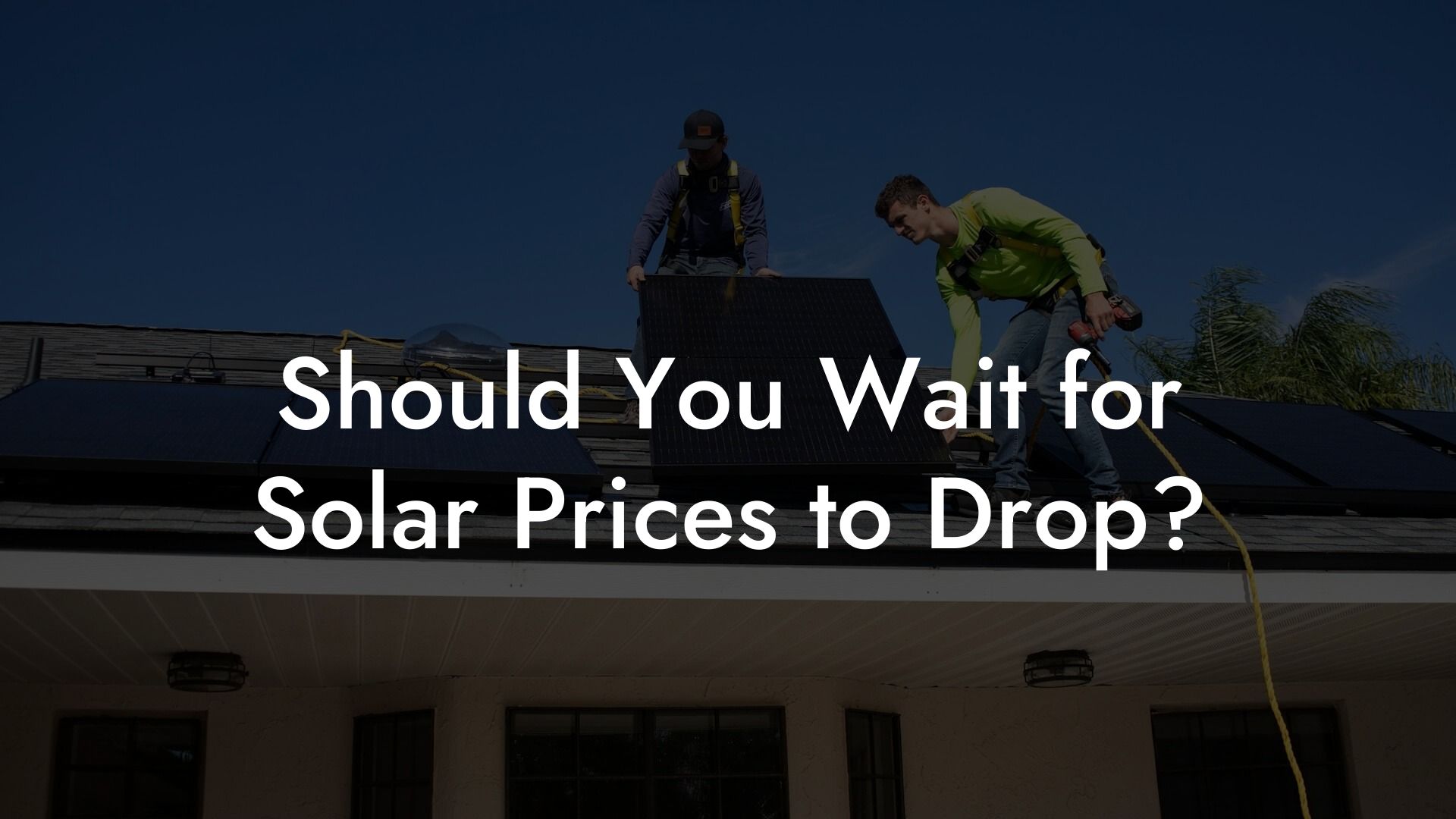
Bottom line up front: no, waiting for solar prices to drop further in New Zealand almost never pays off. Panel hardware has already fallen roughly 90% in real terms over the last decade, the remaining cost in a Kiwi installation is mostly labour, scaffolding, inverters, compliance and margin (none of which are dropping), and every year you wait you're paying full retail power prices to your lines company and retailer instead of generating your own. For most NZ homeowners, the cost of delay outweighs any realistic hardware saving you'd see in the next 12 to 24 months.
This article is for the cautious Kiwi homeowner who's been told (often by a mate at the BBQ) that solar will be "way cheaper next year". We'll show you what's actually driving NZ solar pricing, where prices realistically can and can't fall from here, and what it costs you in real dollars to sit on the fence for another summer.
What "Waiting for Prices to Drop" Actually Means in NZ
The "just wait" argument usually comes from one of two places. Either someone has seen a global headline about low-cost Chinese solar panels flooding Europe, or they remember that solar systems cost $25,000+ a decade ago and they assume the curve keeps going.
Both ideas have a kernel of truth and a big asterisk. Globally, the module (panel) price has collapsed. According to the International Energy Agency and BloombergNEF tracking, polysilicon and module prices fell dramatically through 2023 and 2024. But the module is only a slice of what you pay in NZ.
An installed residential system in New Zealand is roughly:
- Panels: 15-20% of total cost
- Inverter: 10-15% of total cost
- Mounting, cabling, isolators, switchboard work: 10-15%
- Labour, scaffolding, electrician sign-off: 25-35%
- Compliance, COES, lines company approval, GST, margin: the remainder
So even if panel prices fell another 30% tomorrow (and they're already near the floor of manufacturing cost), your total install might drop 4-6%. Meanwhile, the things you're really paying for, the sparkie's day rate, scaffolding hire, the truck, the AS/NZS 4777 compliant inverter, are all subject to NZ wage inflation and the same cost pressures hitting every trade in the country.
The Last Decade: What's Actually Happened to NZ Solar Prices
Looking at MBIE's energy statistics and EECA's residential solar tracking, the trajectory of installed residential solar costs in NZ has flattened significantly since around 2020. The big drops happened between 2012 and 2019. Since then, the picture is more mixed.
A typical 6 kW grid-tied install in 2015 might have cost $18,000-$22,000. The same system today, with better panels and a much smarter inverter, sits broadly in the $11,000-$16,000 range depending on region, roof complexity and installer. That's a real reduction, but the rate of decrease has slowed to a crawl. We've also seen upward pressure from COVID-era shipping costs, labour shortages and a weaker NZ dollar in 2022-2023.
For a deeper breakdown of how today's pricing splits out by component, our current cost per watt for NZ solar installations article shows the live picture.
Why the Panel Price Floor Is Closer Than People Think
Tier-1 manufacturers like Longi, JinkoSolar and Trina are already selling panels at or near production cost in some markets. There's tariff and anti-dumping action in the US and EU, but more importantly, manufacturers can't keep losing money forever. Most industry analysts expect panel prices to stabilise or tick up slightly from here as weaker manufacturers exit the market and stronger players rebuild margin.
If you're waiting for a panel-driven price crash to hit your quote in 2026, you're likely waiting for something that's already happened.
The Real Cost of Waiting: What You're Actually Paying
This is the bit most "I'll wait" homeowners haven't done the maths on. Every month you don't have a solar system, you're paying full retail electricity prices to your retailer. For an average Auckland or Wellington household on roughly 8,000 kWh a year, that's somewhere around $2,400 to $3,200 a year in power bills, depending on your retailer, plan, and lines company.
If a 6.6 kW system would offset 50-65% of that bill (a realistic figure for a north-facing roof with daytime consumption habits), you're looking at potential savings of $1,400 to $2,000 a year you're walking past every twelve months you delay.
So let's run the numbers honestly:
- Best case price drop in 12 months: maybe $500-$800 off a $14,000 install
- Cost of waiting 12 months: $1,400-$2,000 in missed self-generation savings
- Net effect of waiting: you're $600-$1,500 worse off, and you've had 12 months of higher bills
That maths only gets worse if power prices rise (they have, consistently, for the past 15 years per MBIE data) or if government incentives change. For the live picture on what an install would deliver on your specific roof and consumption, our true cost of going solar in NZ guide walks through the full ROI logic.
What Could Actually Change (and What Won't)
To be fair to the "wait and see" crowd, there are a few things that genuinely could shift over the next 1-3 years. Let's be honest about them.
Things That Might Move Pricing Down (Slightly)
- Battery prices: LiFePO4 cell costs have dropped sharply and may continue to ease. If your interest is in batteries rather than panels, there's a reasonable case for waiting 12-18 months, especially as more brands (BYD, Sungrow, Goodwe, Tesla Powerwall 3) compete in NZ.
- Inverter consolidation: More hybrid inverter options at lower price points could trim 5-10% off battery-ready systems.
- Green finance: If more banks expand low-interest green loans, the effective cost of ownership drops even if the sticker price doesn't. Check what you currently qualify for with the Green Finance Qualifier Tool.
Things That Are Pushing Prices Up
- NZ electrician and roofer wages are climbing. Stats NZ data on construction sector wages shows steady year-on-year increases.
- Scaffolding compliance has tightened post-WorkSafe reforms; that cost isn't going back down.
- NZD/USD exchange rate volatility means imported hardware costs can swing 5-10% in either direction in any given quarter.
- Lines company connection and inspection fees (Vector in Auckland, Orion in Christchurch, Wellington Electricity, Powerco) have trended up, not down.
The honest summary: panel hardware might shave a little more off, but installation costs are firmly in an upward trend.
What This Means for You
If You're the ROI Pragmatist
You care about payback and dollars. The maths above is the key insight: a 12-month wait costs you more in missed bill offset than you'd save on hardware. Combine that with rising retail power prices (look at Genesis, Mercury, Contact, Meridian rate changes year on year via the Electricity Authority's data) and the financial case for moving sooner is stronger than the case for waiting.
The one exception: if you genuinely cannot finance the system without stretching, waiting until you have a deposit, a green loan approved, or a mortgage top-up arranged is sensible. Don't overextend yourself for a 5% notional saving.
If You're the Tech-Savvy Optimiser
You're tempted to wait for the next inverter generation or a new battery model. Fair enough, but understand that there's always a next-gen product six months away. The Sungrow SH series, Fronius GEN24, Enphase IQ8 and similar are all mature, well-supported in NZ, and unlikely to be displaced overnight.
If you have an EV or are about to get one, the case for installing now and capturing daytime charging with a dynamic tariff (Octopus Energy NZ, Ecotricity) is even stronger. Every month on a flat tariff with EV charging is a missed arbitrage opportunity.
If You're the Eco-Conscious Family
Your concern is locking in lower living costs and reducing emissions. Both of those benefits start the day the system is commissioned, not in some hypothetical future. The carbon you don't burn this summer is carbon that never enters the atmosphere. And with retail prices trending up, you'll lock in predictable energy costs sooner.
Common Pitfalls and What Installers Won't Tell You
The "just wait" advice often comes from people who genuinely mean well but aren't tracking the NZ-specific dynamics. Here are the traps to avoid.
The "Tech Will Be Way Better Next Year" Trap
Solar panels are already at 21-23% efficiency for residential-grade modules. The jump to 24-25% is real but small. You'd need maybe one extra panel on the roof to match what you'd get from waiting two years for marginally better tech. That's a $300-$500 difference, not a $5,000 one.
The "Government Will Subsidise It Eventually" Trap
NZ doesn't have a US-style federal solar tax credit. EECA's grants and the bank green loans are the main supports, and there's no reliable signal that a big new subsidy is coming. Betting your timing on a policy that doesn't exist is a fast way to lose three years and several thousand dollars in missed savings.
The "I'll Wait for the SolarZero Replacement" Trap
If you were considering a zero-upfront subscription model and you're now uncertain after SolarZero's collapse, that's a legitimate reason to pause, but it's not the same as waiting for hardware prices to fall. Our guide to what happened to SolarZero and the alternatives walks through the practical options.
The "High-Pressure Quote" Trap
On the flip side, don't let this article push you into the arms of an installer who's running a "this week only" deal. Reputable NZ installers don't do that. A good quote is valid for 30-90 days. If someone's pressuring you to sign today, walk away. Get three independent quotes from vetted installers and compare honestly.
A Realistic Decision Framework
Here's a simple way to decide whether your hesitation is warranted.
Move forward now if:
- You own your home and plan to stay 5+ years
- Your roof is north-facing or east/west with reasonable pitch and minimal shading
- You use a meaningful chunk of power during daylight hours (or have an EV / heat pump hot water)
- You have, or can comfortably arrange, financing (cash, green loan, mortgage top-up)
- Your current power bill is $250+ a month
Consider waiting 6-12 months if:
- You're mid-renovation and your roof or switchboard is changing
- You're moving house in the next 2 years
- You're specifically waiting for a battery (not panels) and can hold off until prices ease further
- Your finances genuinely can't accommodate the install yet, and rushing would mean bad debt
Notice that "I read somewhere panel prices might drop" isn't on the second list. That's because the upside is small and the downside (lost savings) is bigger.
Frequently Asked Questions
Will solar panels be cheaper in NZ next year?
Probably not meaningfully. The panel hardware portion of your install (15-20% of total cost) might ease 5-15%, but labour, compliance and lines company costs are rising. Net total install pricing in NZ has been broadly flat since 2020.
Should I wait for a government solar subsidy in NZ?
There's no signalled federal-style subsidy coming. EECA grants and bank green loans (Westpac, ANZ, BNZ, Kiwibank) are the main supports. Waiting for a policy that doesn't exist costs you real money in missed bill offset.
How much does it cost me to wait a year on solar?
For an average NZ home, you'd lose roughly $1,400-$2,000 in self-generation savings over 12 months. Any realistic hardware price drop would be $500-$800. Net cost of waiting: $600-$1,500.
Are battery prices dropping fast enough to wait for?
Battery prices are easing more than panel prices. If batteries are your primary interest and you can manage without them for now, waiting 12-18 months has a clearer case. But you can also install panels now and add a battery later, which is what most NZ homeowners do.
Will power prices in NZ keep rising?
Electricity Authority and MBIE data shows residential electricity prices have risen most years over the past decade. Lines charges (Vector, Orion, Wellington Electricity, Powerco and others) have trended up. Locking in self-generation hedges against that trend.
What if new panel technology like perovskite comes along?
Perovskite tandem cells are promising but aren't commercially mature for residential rooftop in NZ. Realistic mass-market availability is 5+ years away, and early adoption will be at a premium price, not a discount.
Is it better to wait until I can pay cash rather than finance?
Not necessarily. If a green loan at low interest is available to you, the monthly loan repayment often comes in below your monthly power bill savings, meaning you're cash-flow positive from day one. Check your eligibility with the Green Finance Qualifier Tool.
Are solar panels worth it in NZ right now, given the prices?
For most owner-occupiers with a suitable roof and 5+ year horizon, yes. Our detailed answer is in are solar panels worth it in NZ? with full ROI logic.
Where to Go From Here
The honest summary: the "wait for prices to drop" argument made sense in 2014. In 2025, it's mostly a story we tell ourselves to delay a decision that already pencils out. The real questions worth asking aren't "will hardware get cheaper", but "is my roof suitable", "what's my real consumption pattern", and "what's the right system size and configuration for my household".
Start with the true cost of going solar in NZ pillar to anchor the financial picture, then check the current cost per watt for live pricing benchmarks. If finance is your sticking point, the Green Finance Qualifier will show you what's available without committing to anything.