NZ Solar Guide
Do You Need a North-Facing Roof for Solar?

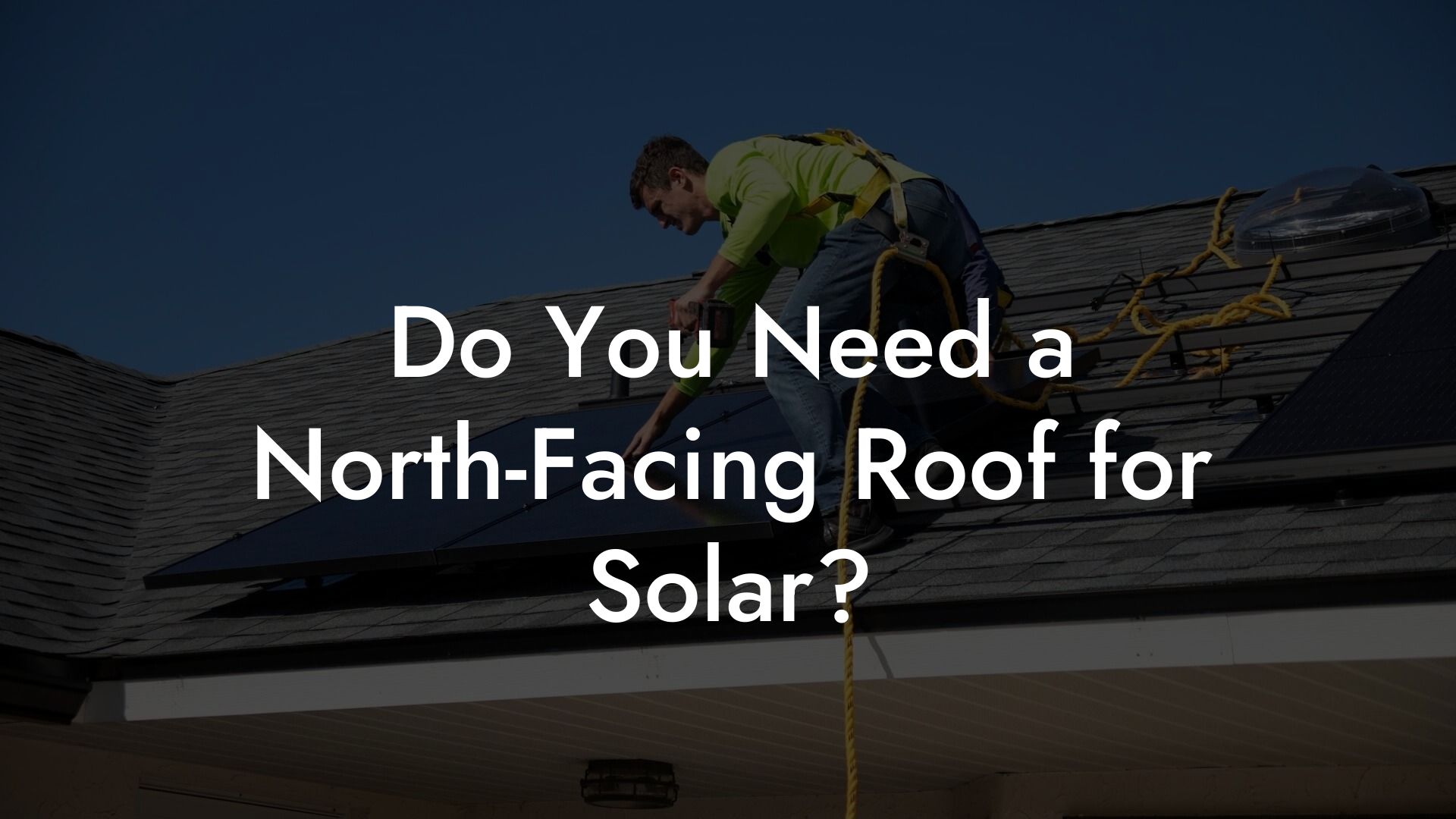
No, you don't need a north-facing roof for solar in New Zealand, and the idea that you do has talked plenty of good homes out of a perfectly sound system. North is the best single direction here, no argument: a north-facing array in NZ produces close to its full rated output because it catches the most sun across the day. But east and west-facing panels typically give up only around 15 to 20 percent of that annual production, according to performance modelling consistent with NIWA's solar radiation data and EECA's guidance. On a system that was going to save you, say, $1,800 a year facing north, you're looking at roughly $1,450 to $1,530 facing east or west. That is not the dealbreaker the myth makes it out to be, and in some households an east-west split actually saves you more money than north ever could.
That last point surprises people, so it's worth slowing down on. The maths of solar in 2025 isn't really about how much electricity your panels make. It's about how much of that electricity you use yourself instead of buying from the grid. Once you understand that, roof direction stops being a yes/no gate and becomes one of several dials you tune.
Why the "north-facing only" myth took hold
It's not made up. It's just out of date. The myth comes from an era when panels were dear, buy-back rates were generous-ish, and the whole game was squeezing the maximum number of kilowatt-hours out of every panel. In that world, north made obvious sense and everything else looked like a compromise.
Two things changed. First, panels got dramatically more cost-effective. A fully installed system in NZ now runs roughly $1.70 to $2.00 per watt for a typical residential install, so adding a few extra panels to make up for a less-than-ideal direction costs far less than it used to. Second, buy-back rates for the power you export collapsed compared with what you pay to buy power back.
That second shift is the whole story, so let's pull it apart.
The number that actually decides everything: self-consumption
Here's the bit installers don't always lead with. In New Zealand you pay around 28 to 38 cents per kWh to buy electricity from the grid (it varies by retailer, region and plan), but most retailers only pay you somewhere around 7 to 17 cents per kWh for the surplus you export. Live buy-back rates move around and differ by retailer, so always check the current numbers before you sign anything; we keep an eye on the better and worse payers and explain how to compare them.
The gap between those two numbers is the most important figure in residential solar. Every kWh your panels make that you use in your own house is worth the full retail price (call it 30-something cents). Every kWh you export is worth maybe a third of that.
So the goal isn't "make the most power." The goal is "make power at the times your house is actually using it." And that is precisely where roof direction stops being about north and starts being about when.
North gives you the most total power, in the middle of the day
A north-facing array peaks around solar noon. Lovely big production curve, all bunched up around midday. If someone is home running the dishwasher, the heat pump, the dryer and charging an EV at lunchtime, that's a brilliant match.
But plenty of households are empty between 9am and 3pm. The kids are at school, the adults are at work, and the house is sitting there exporting that beautiful midday peak to the grid for 10-odd cents while the family buys it back at 30-odd cents at dinner time. That is the self-consumption trap in one sentence.
East and west spread the power across the morning and evening
An east-facing array produces earlier and harder in the morning. A west-facing array produces later into the afternoon and evening. Put panels on both and you flatten the production curve: less of a midday spike, more generation when people are actually awake, showering, cooking and switching things on.
For a household that's out during the day, an east-west split can lift self-consumption from maybe 30 percent up towards 50 or 60 percent, even though the total kWh generated is slightly lower than a north array would manage. More of every low-cost, self-made kWh gets used instead of dumped to the grid at the low export rate. In dollar terms, that often beats north.
A worked example: the same house, two different roofs
Let's make this concrete. Picture a 1970s brick-and-tile place in Rolleston, on the Canterbury plains (Orion network), with a working couple and two school-aged kids. Nobody's home 8am to 4pm on weekdays. They install a 6kW system.
Scenario A: north-facing array. It generates the most total power, but the peak lands at midday when the house is empty. Their self-consumption sits around 30 percent. The other 70 percent exports at the low buy-back rate. The system still pays, but a big chunk of its output is being sold back at the low export rate.
Scenario B: east-west split. Slightly less total generation (maybe 15 percent less), but the production now arrives at breakfast time and again from late afternoon into the evening, lining up with when the family is home. Self-consumption climbs to around 50 percent. Even though fewer kilowatt-hours come off the roof, more of them are worth the full 30-something cents instead of the 10-something cents export rate.
Run the dollars and Scenario B frequently lands ahead, sometimes by a couple of hundred dollars a year, despite generating less. That is the maths the old myth completely misses. The exact figures depend on your usage pattern, your retailer's buy-back deal and your roof, which is why a proper model beats a rule of thumb every time. Our cost and payback calculator lets you play with these variables for your own situation.
So when does direction actually matter?
It matters most for the household that genuinely is home all day with the appliances running at noon: shift workers, retirees, people working from home, anyone with daytime loads like a pool pump or daytime EV charging. For them, north's big midday peak is gold, because they soak it up themselves.
For everyone whose house empties out on weekdays, timing matters more than raw output, and that pushes the decision towards east-west, or towards adding a battery so the midday surplus gets stored for the evening rather than sold at the low export rate. We go properly into whether a battery actually pencils out, and for which households, as part of the wider hardware picture.
What about south-facing roofs?
South is the one direction where the myth has a point. In the Southern Hemisphere a true south-facing pitch gets the least sun, and on a steep south roof the drop-off is real, often 25 to 40 percent below north depending on the pitch and your latitude. The further south you go (Southland, Otago) and the steeper the roof, the worse south performs.
That said, on a low-pitch roof (say under 15 degrees) the difference between the directions shrinks a lot, because the panels are closer to flat and "facing" matters less. A near-flat south-facing roof in Auckland is far from a write-off. A steep south-facing roof in Invercargill probably is. Pitch and latitude both matter, and a good installer will model your specific roof rather than wave you off with a rule.
The regional reality: where you are changes the answer
Roof direction never sits in isolation. It interacts with where in Aotearoa you live, because the underlying sunshine differs enormously. NIWA's long-run records show the sunshine spread plainly:
- Nelson, Blenheim and Whakatāne regularly top the country, often well over 2,400 sunshine hours a year, per NIWA.
- Central Otago has cold but famously clear winter skies, which is great for solar in the cooler months when panels are actually more efficient.
- The West Coast sits down nearer 1,800 to 2,000 hours, with genuinely cloudier conditions, so the gap between a good roof and a mediocre one matters more there.
- Auckland and Wellington land in the comfortable middle, though Wellington's reduced winter sun and Auckland's two-storey shading are real local factors.
Here's a counter-intuitive one worth holding onto: a well-oriented system in a high-sunshine spot can out-earn a north-facing system in a cloudier region. The direction of your roof is only ever one ingredient. The amount of sun falling on your suburb is the other, and you can't change that one.
The thing nobody tells you: shading beats direction every time
If you take one piece of hard-won advice from all of this, make it this. A clean east or west roof with no shade will comprehensively out-perform a north roof that gets shaded at the wrong time of day. Shading is the silent killer of solar performance, and it's far more damaging than picking the "wrong" compass direction.
The reason is how panels are wired. On a basic string setup, shade across even one panel can drag down the whole string, not just that one panel. So that lovely north roof on a 1960s weatherboard place in Mount Eden, with afternoon shade creeping across it from the neighbour's poplar, can quietly underperform an unshaded west roof that the installer didn't even rate at first glance.
This is exactly why panel-level electronics (microinverters or DC optimisers) earn their keep on tricky roofs: they let each panel do its own thing so one shaded module doesn't tank the rest. If your roof has chimneys, vents, a TV aerial, or that one tree you refuse to cut down, the conversation about hardware matters as much as the conversation about direction. We cover the gear options properly in our rundown of solar hardware and tech.
How to make the most of a non-north roof
If your only good roof space faces east, west, or even south, you have several levers, and good installers use all of them:
- Add a few more panels. Because panels are now cost-effective, oversizing slightly to make up for a less-ideal direction is often more affordable than agonising over orientation. More panels, more total output, problem softened.
- Split the array. Put some on east and some on west to stretch generation across the day and lift self-consumption.
- Choose better cells for our climate. Panel technology affects how well your system performs in lower light and heat. The differences between cell types are real and worth understanding; we break down N-type versus P-type cells for NZ conditions if you want the detail.
- Use panel-level electronics on shaded or multi-direction roofs so each panel performs independently.
- Shift your usage. Run the dishwasher, washing machine and EV charging on timers during daylight. This is free and lifts self-consumption no matter which way your roof faces.
- Consider a battery if your generation peaks when you're out, so you store the surplus rather than export it at the low rate.
Where solar genuinely doesn't stack up
Being honest about the limits is the whole point of doing this properly. Roof direction won't rescue a situation that doesn't work for other reasons:
- Renters. You can't easily justify a fixed install on a roof you don't own, regardless of which way it faces.
- Heavily shaded roofs with no clean section in any direction. No amount of clever wiring fully fixes a roof in permanent shade.
- Homes that are empty all day with low overall power use and no battery. If you generate when you're out and use little when you're home, you'll export most of it at the low buy-back rate and the payback stretches out.
- Short-term ownership. If you're selling within a couple of years, the payback maths gets tighter, though solar does tend to help a home's appeal at sale.
Notice that "my roof doesn't face north" is not on that list. It's a factor to model, not a reason to walk away.
What to ask your installer
When you get quotes, push past the glossy production figure and ask the questions that actually drive your savings:
- "What's my estimated self-consumption percentage, and how did you work it out?" If they can't answer this, they're selling you kilowatt-hours, not savings.
- "Have you modelled an east-west split against a north layout for my specific usage?"
- "How does shading on my roof affect the numbers, and do you recommend microinverters or optimisers?"
- "What buy-back rate did you assume, and which retailer?" Make sure it matches a real, current offer.
- "What are the panels, and are they from a financially solid manufacturer who'll honour the warranty?" The strength of the warranty is only as good as the company behind it, which is worth understanding before you commit; we explain what the "Tier-1" label actually means for your warranty.
A fair price in 2025 sits around $1.70 to $2.00 per watt fully installed for a standard residential system, in line with installer pricing and MBIE data. If a quote is dramatically lower, ask what's being skimped; if it's dramatically dearer, ask what you're paying extra for.
Frequently Asked Questions
Is a north-facing roof still the best option for solar in NZ?
For total annual generation, yes, north captures the most sun across the day in the Southern Hemisphere. But "most generation" and "most savings" are not the same thing. If your house is empty during the day, an east-west split that lifts self-consumption can save you more money even while generating slightly less.
How much less power do east or west-facing panels produce?
Typically around 15 to 20 percent less annual output than an equivalent north-facing array, based on performance modelling consistent with NIWA solar radiation data. That gap is modest and is often outweighed by better timing of generation, especially for households that use most power in the morning and evening.
Can I put solar on a south-facing roof?
You can, and on a low-pitch south roof the loss is fairly small. On a steep south-facing roof, particularly in the lower South Island, output can drop 25 to 40 percent below north, so it's the one direction where you should be cautious. Pitch and latitude both matter, so get your specific roof modelled rather than relying on a rule of thumb.
What is self-consumption and why does it matter so much?
Self-consumption is the share of your solar power you use in your own home rather than export to the grid. It matters because you pay around 28 to 38 cents per kWh to buy power but most retailers only pay roughly 7 to 17 cents per kWh for exports. Every kWh you use yourself is worth far more than one you sell, so maximising self-consumption is the heart of solar economics.
Is an east-west split better than north?
It can be, for the right household. An east-west split spreads generation across the morning and evening, which lines up with when many families are actually home. That lifts self-consumption, and for a daytime-empty home it frequently produces a better financial result than north despite slightly lower total output.
Does shading matter more than roof direction?
Yes, often dramatically so. A clean east or west roof with no shade will usually out-perform a north roof that gets shaded at the wrong time of day. On basic string systems, shade on one panel can drag down the whole string, which is why panel-level electronics like microinverters or optimisers are worth considering on shaded or multi-direction roofs.
Will solar work where I live if it's a cloudier region?
Yes, though the returns differ. NIWA's records show the West Coast sits nearer 1,800 to 2,000 sunshine hours a year while Nelson and Blenheim regularly top 2,400. Solar still works in cloudier areas, but the gap between a well-oriented roof and a mediocre one matters more, so getting the orientation and shading right counts for more there.
Should I add a battery if my roof doesn't face north?
A battery can be a smart fit if your generation peaks when you're out, because it stores that surplus for the evening instead of exporting it at the low buy-back rate. Whether it pencils out depends on your usage pattern, your buy-back rate and the battery cost, so it's worth modelling properly rather than assuming.
The Bottom Line
You do not need a north-facing roof for solar in New Zealand. North is the best single direction, but the difference is modest, and for a household that's out during the day an east-west split can genuinely save you more by lining generation up with when you actually use power. The real villains are shading and a mismatch between when you generate and when you use, not the compass.
So before you let anyone tell you your roof is "wrong," get the maths done on your specific situation: your roof, your shading, your usage, your retailer's buy-back rate. If you want to see how the numbers fall for your home, our payback calculator is a good place to start, and when you're ready for real figures, lining up a few quotes from people who'll model your roof honestly is the next sensible step.