NZ Solar Guide
Does Solar Work on Cloudy or Rainy Days?

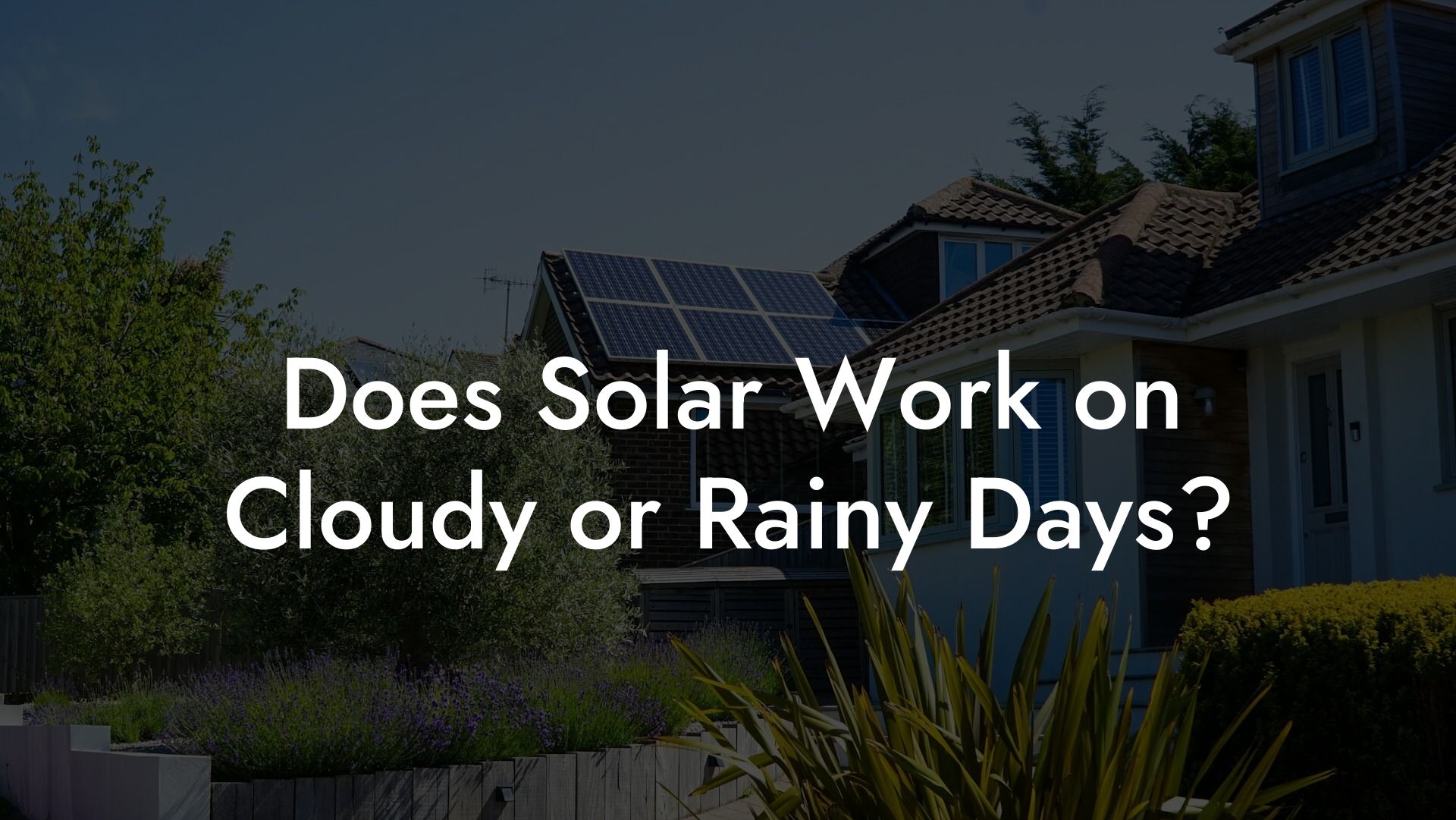
Yes, solar panels absolutely work on cloudy and rainy days in New Zealand, just at reduced output. On a typical overcast day, a modern PV array still produces roughly 10% to 25% of its peak rated output, and on a bright but cloudy day that figure can climb to 40% or more thanks to diffuse light. Across a whole year, EECA and NIWA data show that even our cloudier regions (Wellington, Waikato, parts of the West Coast) generate enough annual sunshine to make rooftop solar genuinely worthwhile. The "NZ is too cloudy for solar" myth is just that, a myth, and we'll show you why with real numbers below.
This article is for anyone who has ever looked up at a grey Auckland sky in July and thought, "what's the point of solar here?" We'll explain how panels actually generate power, what happens on cloudy days, how rain affects things (spoiler: it helps), and how the modern N-type panels going on Kiwi roofs in 2024-2025 are specifically better in low-light conditions than the older P-type kit they replaced.
This is part of our guide to NZ solar hardware and tech. We won't cover system sizing or ROI here, but we'll point you to the right tools at the end.
What "Cloudy Day Solar" Actually Means for NZ Homeowners
Solar panels don't need direct, blazing sunshine to produce electricity. They need photons, which is a fancy word for "particles of light". Photons get through clouds. They get through rain. They even get through the layer of marine haze that hangs over Hauraki Gulf on a humid summer morning.
What changes on a cloudy day is the intensity of those photons hitting the panel surface, measured in watts per square metre (W/m²). On a clear midday in summer, irradiance at sea level in NZ can hit roughly 1,000 W/m², which is the standard test condition panels are rated against. On an overcast day, that drops to anywhere from 100 to 300 W/m². On a heavy storm day, you might see 50 to 100 W/m².
The key insight: output is roughly proportional to irradiance. A 6 kW system isn't dead at 200 W/m², it's just producing around 1.2 kW. Still useful. Still offsetting your fridge, your hot water heat pump, your modem, your standby loads. The lights are very much on.
Diffuse Light: The Unsung Hero
Here's the bit installers rarely explain well. Sunlight reaches your roof in two forms: direct beam (the bright, focused light on a clear day) and diffuse (scattered light bouncing off clouds, atmosphere, and surroundings).
On an overcast day, the cloud layer acts like a giant softbox in a photography studio. Direct beam drops to near zero, but diffuse light fills the whole sky. Your panels see light coming from every angle, not just the sun's position. This is why a "bright cloudy" day, the kind where you forget your sunnies and end up squinting anyway, can produce surprisingly strong yield: sometimes 40-60% of a clear-sky day's output.
Modern panels, especially the N-type TOPCon and HJT cells now being shipped to NZ, are explicitly designed to harvest diffuse light better than the older P-type PERC technology. More on that shortly.
The Key Numbers: How Much Sun Does NZ Actually Get?
Let's bust the "too cloudy" myth with real data from NIWA's national climate database and EECA's solar resource maps.
Average annual sunshine hours across NZ regions:
- Nelson / Marlborough / Blenheim: 2,400-2,600 hours (sunniest in NZ)
- Bay of Plenty / Tauranga / Whakatāne: 2,200-2,350 hours
- Hawke's Bay / Napier: 2,200-2,400 hours
- Canterbury / Christchurch: 2,100-2,200 hours
- Auckland: 2,000-2,100 hours
- Northland / Whangārei: 1,950-2,100 hours
- Wellington: 2,000-2,100 hours (yes, really)
- Waikato / Hamilton: 1,950-2,050 hours
- Otago / Dunedin: 1,650-1,800 hours
- West Coast (Hokitika, Greymouth): 1,800-2,000 hours
For context, London gets around 1,630 hours, Berlin gets about 1,625, and Germany has the highest residential solar adoption rate in the world. Even Dunedin, our least sunny major centre, outperforms most of Europe.
The point isn't that NZ is the Sahara, it's that we have more than enough sun for solar to make economic sense, even in our cloudier regions. Annual generation is what matters, not whether today specifically is sunny.
Real-World Output by Weather Type
For a typical 6 kW residential array on a north-facing roof at 30 degrees, here's what you'd actually see on the inverter app:
- Clear summer day: 35-45 kWh generated
- Clear winter day: 15-22 kWh generated
- Bright cloudy day (summer): 18-28 kWh
- Overcast day (summer): 8-15 kWh
- Heavy rain / storm day: 3-8 kWh
- Winter overcast: 3-6 kWh
Even on the worst day, you're still generating. And in a typical NZ year, the average household will see somewhere between 1,000 and 1,400 kWh per installed kW, depending on region. So a 6 kW system in Auckland might produce 7,200-8,400 kWh annually, and that figure already bakes in every cloudy, rainy, and grey day you'll encounter.
How Rain Affects Solar (Hint: It's Mostly Good)
This surprises people: rain is actually your panels' friend. Here's why.
Solar panels accumulate dust, pollen, salt spray (a real factor in coastal NZ), bird droppings, and the occasional kauri pollen bomb. This grime reduces output, sometimes by 5-10% if left long enough. Rain washes most of this off for free.
During the rain itself, output does drop, often to around 5-15% of rated capacity, because the cloud cover producing the rain is thick. But rain typically passes within hours, and the freshly cleaned panels then perform a few percent better than they did before the storm. The Met Service forecast looks gloomy on the day; your inverter app looks healthier the day after.
What rain does not do:
- Damage the panels (they're tested to withstand hail up to 25mm at terminal velocity)
- Cause electrical faults (panels and inverters are sealed to IP65 or higher)
- Reduce panel lifespan (most Tier-1 panels carry 25-30 year performance warranties through every kind of NZ weather, see our explainer on what Tier-1 actually means for your warranty)
If anything, coastal Kiwis benefit more from rain than inland ones. Salt build-up on Bay of Plenty, Northland, and Wellington South Coast installations is a real maintenance consideration, and regular rinses keep things tidy.
Why Modern N-Type Panels Are Better in NZ Conditions
If you're shopping for solar in 2024-2025, you'll hear a lot about N-type cells (TOPCon, HJT) replacing the older P-type PERC technology that dominated the 2015-2022 era. This shift matters a lot for cloudy-day performance.
N-type panels have three practical advantages for the NZ climate:
- Better low-light response: N-type cells start generating useful power at lower irradiance thresholds. You'll see your inverter wake up earlier in the morning and stay productive later into a grey afternoon.
- Lower temperature coefficient: N-type panels lose less output as they heat up. Less critical in NZ than in Australia, but still helps on hot summer days.
- Higher bifaciality: Many N-type panels are bifacial, meaning the rear surface also generates power from reflected light. On a light-coloured Colorsteel roof, this can add a couple of percent annually.
We unpack the technical differences in detail in our N-type vs P-type comparison for NZ, and we review two specific N-type brands now widely available here in our DAS Solar and Tongwei review.
Bottom line: if you're worried about NZ's cloudier weather, the panels you buy in 2025 are meaningfully better at handling it than the panels your neighbour bought in 2018.
What This Means for You
For the ROI Pragmatist
You care about annual generation, not daily theatre. The good news: every reputable installer's quote already factors in NZ's weather. When they quote you 7,500 kWh per year from a 6 kW system in Hamilton, that figure includes winter, autumn drizzle, and the three weeks of cyclone season. You don't need to discount it further "for clouds".
What you should watch: any installer who quotes you generation figures higher than 1,400 kWh per installed kW per year (outside of Marlborough/Nelson) is likely being optimistic. Get a second opinion. Our Solar System Cost & ROI Calculator uses conservative, region-specific yield figures.
For the Tech-Savvy Optimiser
Cloudy-day output is where N-type panels and quality inverters earn their keep. A premium inverter (Fronius, Sungrow, SolarEdge) has a wider MPPT voltage window, meaning it can squeeze useful power from very low irradiance where a budget inverter might just sit idle.
If you're on a dynamic tariff like Octopus NZ's plans, cloudy days also matter for your self-consumption strategy. A battery lets you store the morning's generation for the evening peak even when daytime output is intermittent. A hybrid inverter plus 10 kWh of LiFePO4 storage essentially smooths over the weather entirely from your bill's perspective.
For the Eco-Conscious Family
Reassurance: the lifecycle emissions of a NZ solar array are paid back within roughly 2-3 years of operation, and they keep generating clean electrons for another 25+ years after that. Cloudy days don't change the maths in any meaningful way. Your panels are still displacing thermal generation on the national grid every hour they're producing, even if it's only 1 kW instead of 6.
NZ's grid is already around 85% renewable on average, but the marginal kWh, the one that turns on or off based on demand, is often gas or coal. Your cloudy-day kilowatt-hour is still doing climate work.
What Installers Won't Tell You (And Should)
A few honest things we wish the industry communicated better.
Winter generation will shock you the first year. A 6 kW system in Wellington might produce 35 kWh on a perfect December day and just 4 kWh on a wet July day. That's a 9x swing. Nobody warns you in the sales pitch. It's not a fault, it's physics. Annual averages are what matter.
Inverter clipping is a real thing. On the very brightest days, your panels can actually produce more than the inverter can handle, and the excess gets "clipped". Most NZ systems are deliberately oversized on the panel side (e.g. 7 kW of panels feeding a 6 kW inverter), which is fine and intentional. It means cloudy-day output is closer to inverter capacity than you'd otherwise see.
Shade matters more than cloud. A neighbour's growing pohutukawa or a poorly placed chimney can knock 20-30% off your generation. Cloud is fair, cloud is uniform, cloud is forecastable. Shade is permanent and asymmetric. Spend more time worrying about your roof's shading than the regional weather.
Optimisers and micro-inverters help in cloudy/partial-shade conditions. If your roof has any complexity (multiple orientations, vents, chimneys, dormers), per-panel optimisation from Enphase or SolarEdge can claw back 5-15% in mixed conditions. Worth the premium for complex Kiwi villas, less critical for a clean north-facing Universal-style roof.
Frequently Asked Questions
Do solar panels work at night?
No. Panels need light, and moonlight is far too weak to generate meaningful power. This is what batteries solve: store daytime generation for night-time use. Your house simply draws from the grid (or battery) overnight.
How much do solar panels produce on a cloudy day in NZ?
Typically 10-25% of peak rated output on a heavily overcast day, and up to 40-60% on a bright cloudy day with high diffuse light. A 6 kW system might produce 8-15 kWh on a cloudy summer day versus 35-45 kWh on a clear summer day.
Is solar still worth it in Wellington with all the cloud and wind?
Yes. Wellington gets around 2,000-2,100 sunshine hours a year, which is more than most of Germany. Wellington Electricity's lines area sees plenty of solar installations performing well. The wind doesn't affect solar (panels are rated to 2,400 Pa wind load minimum), and overall annual yield is competitive with Auckland.
Does heavy rain damage solar panels?
No. Panels are sealed, tested to withstand hail up to 25mm at terminal velocity, and rated for outdoor use across their full 25-30 year warranty period. Rain actually helps by cleaning off dust, pollen, and salt spray.
What's the difference in cloudy-day performance between budget and premium panels?
Modern Tier-1 N-type panels (TOPCon, HJT) typically produce 5-15% more in low-light and diffuse conditions than older P-type PERC panels. The gap is widest in cloudy regions and on grey winter days. It narrows on clear midday summer conditions.
Will solar work in winter?
Yes, but with significantly reduced output, typically 30-50% of summer generation depending on region. The sun is lower in the sky and the days are shorter. This is why annual figures matter more than daily ones. Your December surplus more than makes up for July's quiet days.
Do I need a battery to make solar work on cloudy days?
No, but it helps smooth things out. Without a battery, your house simply draws from the grid when generation is low, and exports any surplus when generation is high. With a battery, you can self-consume more of your own generation and rely less on imported electricity, regardless of the weather.
How does cloudy weather affect my buy-back rate?
It doesn't affect the rate itself, but it does affect how many kWh you have to export. On a cloudy day, you'll likely consume most of what you generate and have little to export. For up-to-date buy-back rates by retailer, check our Dynamic Tariff & Buy-Back Engine on the site.
Are bifacial panels worth it in cloudy NZ conditions?
For most residential roofs, the bifacial gain is modest (1-4% extra annually) because the panels sit close to a dark roof surface that doesn't reflect much light. They make more sense on ground-mounted, carport, or pergola installations where the rear of the panel can see reflected light from concrete or grass.
Where to Go From Here
The "too cloudy for solar" objection is one of the most common, and one of the easiest to put to bed once you look at the data. NZ has plenty of sun, our weather varies enormously by region, and modern N-type panels are explicitly designed to make the most of diffuse light. If you're still curious about the hardware side of things, our Hardware & Tech pillar guide is the best place to start.
To see what your specific roof might produce, including a realistic, weather-adjusted annual yield estimate, run the numbers through our Solar System Cost & ROI Calculator. And when you're ready to talk to actual humans, get matched with three vetted installers below.