NZ Solar Guide
Microinverters vs. String Inverters in Shaded Areas

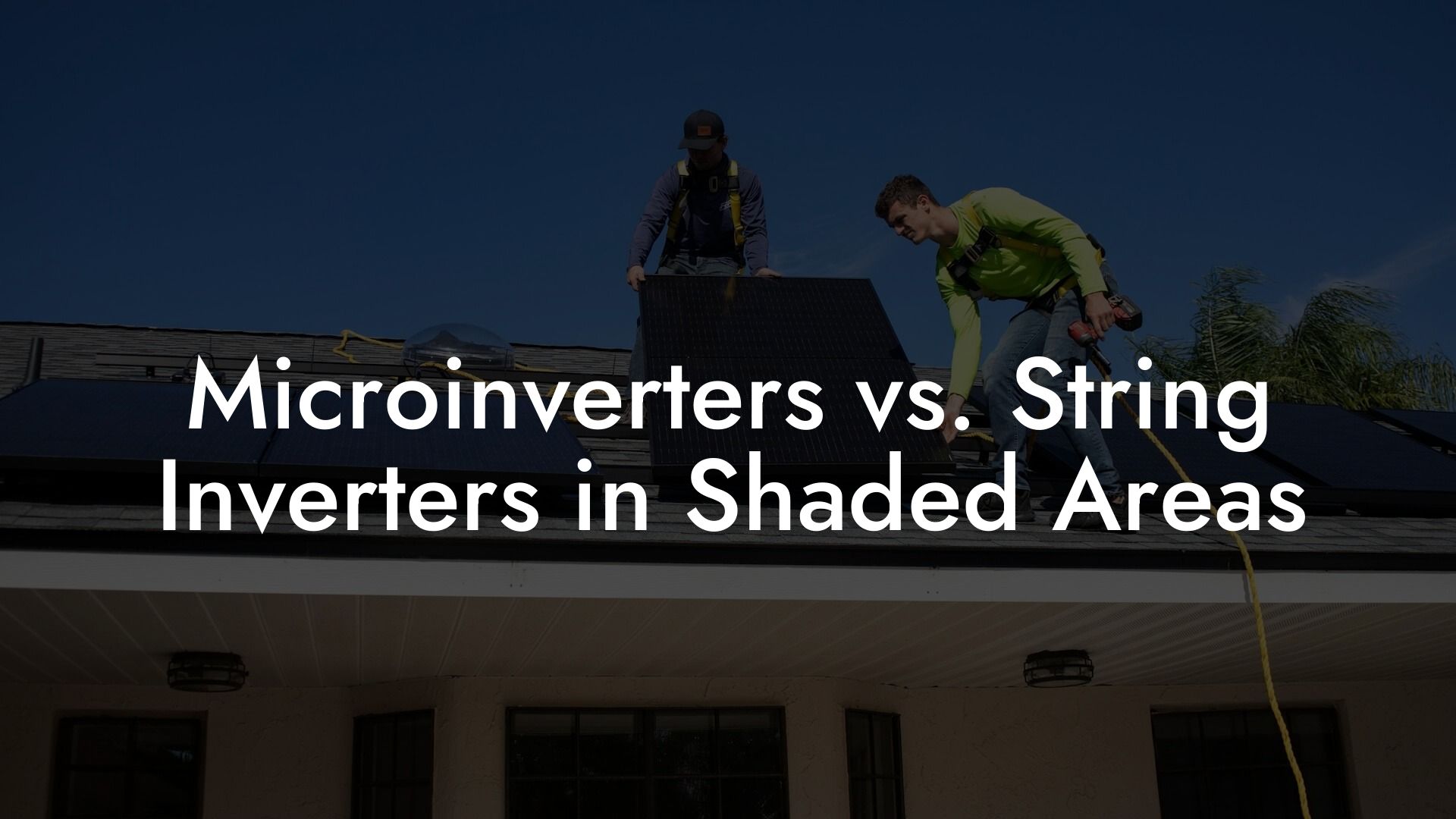
Bottom line up front: if your NZ roof has meaningful shade from trees, chimneys, dormers, or neighbouring buildings, microinverters (or DC optimisers paired with a string inverter) will almost always produce more energy over the system's life than a plain string inverter. A traditional string inverter is still the better-value choice for clean, unshaded roofs with a single orientation. The honest answer for most shaded Kiwi homes sits in one of two places: Enphase microinverters for the worst shade and complex rooflines, or a Fronius/SMA/Sungrow string inverter paired with Tigo optimisers on just the affected panels. Pick the right tool for your actual roof, not the salesperson's preferred margin.
This article is for homeowners who have already worked out that solar makes sense for them and are now trying to choose the right inverter technology. We'll cover what each option actually does, where each one shines on a typical NZ roofline, the real cost difference, and the questions to ask installers. If you want to start with the basics, our Hardware & Tech pillar guide is a good warm-up.
What "Shade" Actually Means for a NZ Roof
Shade is the single biggest reason inverter choice matters. On a traditional string inverter, panels are wired in series like Christmas lights. The shadiest panel sets the current for the whole string, so even a small shadow can drag down the output of every panel in that string.
NZ rooflines are particularly prone to this. We have:
- Mature native and exotic trees close to houses (especially in older Auckland, Wellington, and Dunedin suburbs)
- Brick or block chimneys casting morning or afternoon shadows
- Two-storey neighbours on small urban sections in Auckland's isthmus and Wellington's hill suburbs
- Dormers, gables, and vent pipes on the complex hip-and-gable rooflines common in 1920s-1960s NZ housing stock
- Hills and valleys that cast long winter shadows in places like Wellington, Dunedin, and Queenstown
If you're on a clean, single-pitch tile or longrun roof with no obstructions, shade may be a non-issue. But for the rest of us, it's the single biggest engineering decision in the system.
The Three Inverter Options Explained
1. String Inverter (the traditional approach)
A single inverter, usually mounted on a garage or exterior wall, converts the DC output of an entire "string" of panels into AC. Common NZ brands include Fronius (Austrian, widely respected), SMA (German, premium), Sungrow (Chinese, dominant market share, strong value), and Goodwe (mid-range hybrid-friendly).
Pros: lowest upfront cost, simple, fewer points of failure on the roof, easy to replace one box in 10-15 years. Cons: shading on one panel hurts the whole string, no per-panel monitoring, harder to mix orientations.
2. String Inverter + DC Optimisers (the hybrid approach)
This puts a small electronic device behind each panel (or just the shaded panels, in the case of Tigo) that lets each panel operate at its own optimal point, while still feeding into a central string inverter. SolarEdge is the full-system version (every panel gets an optimiser, paired with a SolarEdge inverter). Tigo is the modular version, you only optimise the panels that need it.
Pros: per-panel performance, panel-level monitoring, mitigates shade well, less expensive than full microinverter systems. Cons: extra rooftop electronics (more to fail eventually), proprietary lock-in with SolarEdge, slightly more complex install.
3. Microinverters (the per-panel approach)
Each panel has its own small inverter clipped to the rack underneath it, converting DC to AC right at the panel. The market is essentially Enphase (American, dominant globally) with a handful of smaller competitors. The output of each panel is independent of every other panel.
Pros: best-in-class shade tolerance, no high-voltage DC on the roof (safety win), genuinely modular (easy to add panels later), 25-year warranties standard, brilliant per-panel app monitoring. Cons: highest upfront cost (often 15-25% more than a string system), more roof-mounted electronics, replacement requires roof access.
The Honest Cost Difference in NZ
Pricing varies by installer, but as a guide for a typical 6 kW residential system in 2024-2025:
- String inverter only (Sungrow, Goodwe): baseline cost
- String inverter + Tigo optimisers on shaded panels only: roughly $300-$600 more than baseline
- SolarEdge with full optimisers: roughly $1,000-$1,800 more than baseline
- Enphase microinverters: roughly $1,500-$2,500 more than baseline
These are ballpark figures, not quotes. The real question is whether that extra spend pays back in extra energy harvest over 25 years. For an unshaded roof, the answer is almost always no. For a heavily shaded roof, the answer is often yes, and sometimes by a significant margin. To run the numbers on your own situation, use our Solar System Cost & ROI Calculator.
The Shade Decision Framework
Here's the practical decision tree we'd walk a friend through:
Scenario A: No meaningful shade, single roof plane
Go with a quality string inverter. Fronius Primo if you want premium European build, Sungrow if you want strong value with a solid warranty. Don't pay for optimisers or microinverters you won't benefit from. This is the right call for the majority of new-build Kiwi homes on standard sections.
Scenario B: Light shade on a couple of panels (one tree, one chimney)
A string inverter paired with Tigo optimisers on just the shaded panels is usually the sweet spot. You get the cost-effectiveness of a string system plus targeted shade mitigation where you need it. This is a common scenario in Hamilton, Tauranga, and outer Christchurch suburbs.
Scenario C: Heavy or moving shade, complex roofline, multiple orientations
Enphase microinverters are usually worth the extra spend. If half your roof faces north-east and the other half north-west, with a big pohutukawa shading the east face from 3pm onwards, microinverters let every panel work independently. This is the classic Auckland villa or Wellington hill-suburb scenario.
Scenario D: You want to expand later, or you're battery-curious
Microinverters are genuinely modular: adding three more panels in two years is just a matter of bolting them on. With string inverters, expansion is constrained by string sizing rules. If you're planning an EV in three years and a battery in five, build flexibility in now. Our piece on N-Type vs P-Type panels covers similar future-proofing logic.
What This Means for Each Type of Buyer
The ROI Pragmatist
The numbers matter. On a fully unshaded roof, optimisers and microinverters extend your payback by 1-3 years for negligible extra harvest. On a roof with 10-20% shade losses, microinverters can recover most of that lost generation, often paying back the extra cost in 6-9 years and then delivering free upside for the remaining 15+ years of system life. Insist your installer models both options against your specific roof, not a generic case study.
The Tech-Savvy Optimiser
Enphase microinverters give you per-panel data via the Enlighten app. You can see which panel is underperforming, when, and why. SolarEdge offers similar visibility. If you love data, this is genuinely useful (and useful for warranty claims down the track). String inverters typically give you whole-system data only, which is fine for most people but limiting if you want to tune behaviour around generation.
The Eco-Conscious Family
Microinverters keep DC voltage off the roof (each panel's output is converted to AC immediately), which is a small but real safety win, particularly relevant if you've got kids climbing onto sheds or you live somewhere with a wildfire risk profile (parts of Marlborough, Hawke's Bay, Central Otago). They also tend to come with 25-year warranties matching the panels, which feels more cohesive for a long-term household investment.
Common Pitfalls and What Installers Won't Always Tell You
This is where the trust-proxy hat goes on. A few honest things to be aware of:
1. "We always use string inverters" is a margin signal. Some installers are pure Sungrow shops because the margin is good and the install is familiar. That's fine if your roof suits a string inverter, but be wary if no one has done a proper shade analysis using software like Aurora Solar or PVsyst.
2. "Microinverters are always better" is also wrong. A handful of installers push Enphase on every job because the unit price is higher and so is the margin. On a clean, unshaded roof, you're paying for capability you won't use.
3. Shade modelling should be on the quote. A reputable installer will produce a shade map (often a graphic overlay of your roof showing annual sun-hour losses by panel). If they can't produce one, they're guessing. The vetted installers we recommend all do this as standard.
4. Mixed orientations need careful design. If panels face different directions, a single-string inverter forces them all to behave like the worst performer of the moment. Multi-MPPT string inverters (which Fronius and Sungrow both offer) handle two orientations elegantly. Three or more orientations push you toward optimisers or microinverters.
5. Warranty terms are not the same. Enphase microinverters carry a 25-year warranty. Most string inverters carry 5-10 years standard, extendable to 10-12 years for an extra fee. Over a 25-year system life, you'll likely replace a string inverter at least once. Factor that into your total cost of ownership. For context on warranty thinking, see our piece on Tier-1 panels and warranty meaning.
6. Future battery integration matters. Enphase has its own ecosystem battery (IQ Battery), which integrates seamlessly with its microinverters. If you want a Tesla Powerwall, a BYD, or a Sungrow battery, a hybrid string inverter is usually the cleaner architecture. Decide your battery direction (or at least its likely chemistry) before locking in the inverter.
The Brand Shortlist for NZ in 2025
To save you a week of forum scrolling, here's the honest shortlist:
- Sungrow (string + hybrid): the value king. Strong warranty, widely supported, dominant in NZ. Good fit for clean roofs and battery-ready installs.
- Fronius Primo / Symo / GEN24 (string + hybrid): premium European engineering, excellent multi-MPPT for split orientations, strong installer support network.
- SMA Sunny Boy / Tripower (string + hybrid): the granddaddy of solar inverters. Bulletproof, slightly conservative on features, premium price.
- Goodwe (string + hybrid): solid mid-range, battery-ready, popular for budget-conscious hybrid installs.
- SolarEdge (string + DC optimisers): full per-panel optimisation, good for shaded and complex roofs, locks you into the SolarEdge ecosystem.
- Tigo (DC optimisers, retrofit-friendly): mix-and-match shade mitigation, works with most string inverters, our pick for "selective" optimisation.
- Enphase (microinverters): the gold standard for shaded, complex, or modular installs. Premium price, premium product.
Frequently Asked Questions
Do microinverters work in NZ conditions?
Yes. Enphase microinverters are rated for outdoor use and handle NZ temperatures, humidity, and salt-air exposure well (with appropriate corrosion ratings for coastal installs). They're widely deployed from Northland to Southland.
If I have just one shaded panel, do I need microinverters on every panel?
No. This is a common upsell trap. Adding a single Tigo optimiser to the affected panel, paired with a standard string inverter, is usually the right answer. Save the money for a battery later.
What about reliability with so many microinverters on the roof?
Enphase microinverters have a documented failure rate well under 0.1% per year in the field, and they carry 25-year warranties. The math actually favours them on reliability over the system's life, even with more units, because each unit is simpler and runs cooler than a single hard-working string inverter.
Can I retrofit optimisers later if my shade gets worse (e.g. tree grows)?
Yes, Tigo optimisers can be retrofitted to existing string installs. This is one of their strongest features. SolarEdge optimisers, by contrast, only work with a SolarEdge inverter, so retrofitting them means changing the inverter too.
Will microinverters increase my insurance premium?
Generally no. Most NZ insurers (AA, State, Tower, IAG brands) treat solar systems as a single insured asset under your house contents/dwelling policy. Notify your insurer when the system is commissioned, but the inverter technology choice rarely affects the premium.
Do I lose generation if one microinverter fails?
Only the output of that single panel. The rest of the system keeps producing normally. With a string inverter failure, the whole system stops until it's replaced.
Are microinverters better for batteries?
Not necessarily. AC-coupled batteries (like the Enphase IQ Battery or a Tesla Powerwall 3) pair well with microinverters. DC-coupled batteries (most other systems) work more efficiently with hybrid string inverters. There's no universal winner; it depends on your chosen battery.
Does the Clean Energy Council or EECA recommend one over the other?
Neither EECA nor the Electricity Authority prescribes an inverter type. EECA's role is to provide consumer-grade guidance and grants (including the Warmer Kiwi Homes adjacent schemes); the choice of inverter is between you, your installer, and your specific roof.
What's the typical lifespan of each option?
String inverters: 10-15 years, often replaced once during a system's life. Microinverters: 25-year warranty matching panels, often expected to outlive their warranty. Optimisers: 25-year warranty, similar lifespan expectations.
How do I know if my installer is being honest about my shade?
Ask for the shade analysis output (a coloured roof map showing annual losses per panel). Ask why they're recommending the specific inverter technology. Get a second quote from another vetted installer. Compare. If both quotes agree on the diagnosis, you're probably looking at the right answer.
Where to Go From Here
The inverter choice is one of three or four big technical decisions in a residential solar install (alongside panel selection, battery readiness, and mounting hardware). If you've decided on your inverter strategy, the next questions are usually about panels and warranty thinking. Have a read of our Tier-1 panel guide, our comparison of N-Type vs P-Type cells, and our review of DAS Solar and Tongwei N-Type panels for the panel side of the decision.
If you're now ready to put your roof in front of real installers and see what shade modelling and inverter recommendations come back, that's the next sensible step. Make sure the installers you're talking to actually do per-panel shade analysis as standard, not just a pretty quote.